Years ago, my husband presented me with one of the coolest gifts he’s ever given – the chance to drive a tank and crush a car.
Several years ago, my husband presented me with one of the coolest gifts he’s ever given me – the chance to drive a tank and crush a car.
While that may not sound romantic to you, it was over-the-top fabulous for me, because I love riding in anything that’s unusual or eccentric.
I was recently reminded of that experience when I was Googling something and the following lyric popped up:
“Ah, that’s my girl, could she drive a forklift? Maybe a tank?”
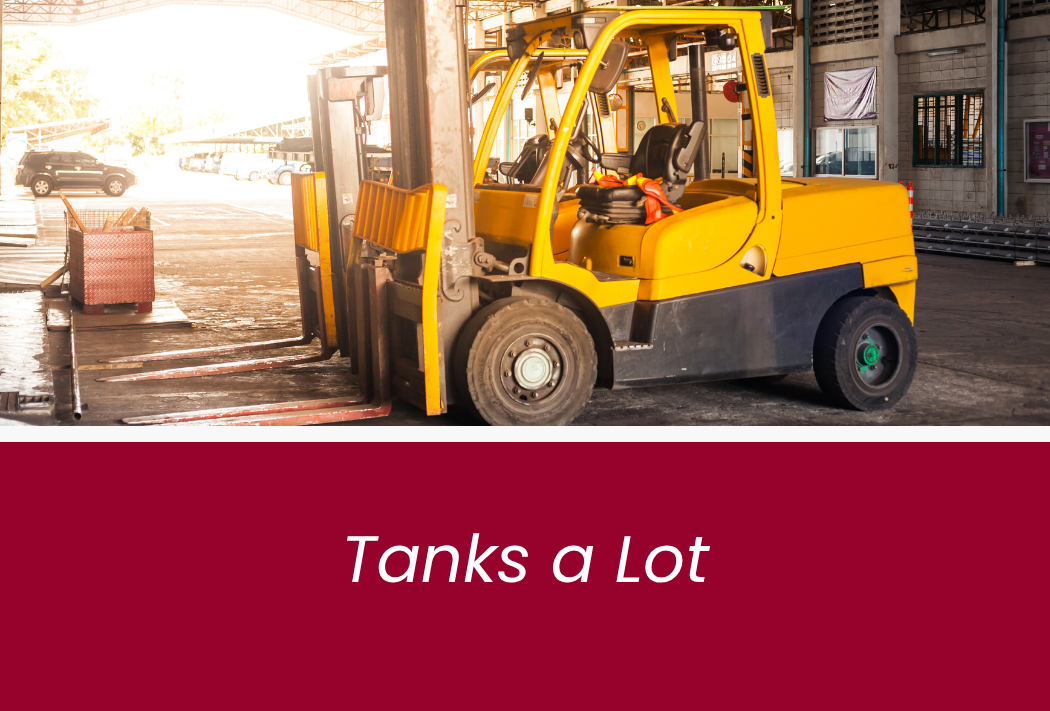
Clearly my answer to the latter is yes. However, the answer to the former is a resounding no, because as a longtime supply chain professional, I’m way too aware of just how foolhardy it would be to get behind the wheel of a forklift without the proper training.
Simply put, I respect forklifts and their power way too much to try to drive one.
There’s another reason I respect the power of forklifts.
Before catastrophes hit, it’s imperative for humanitarian organizations to get items like food, shelter, water and medical supplies – most of which are palletized — staged nearby. And after disasters, it’s equally imperative for them to quickly ensure that these same goods (and many others) are loaded onto trucks and then unloaded and situated at either intermediate sites or sites where direct aid is being provided.
Not surprisingly, most of these activities wouldn’t be possible or wouldn’t happen as quickly without Material Handling Equipment (MHE). Which means that if it weren’t for forklifts, pallet jacks and such, many disaster survivors might not get the help they need.
It’s a similar story for other kinds of nonprofits, including food banks, organizations that serve people with disabilities, and faith-based charities. Day after day, they’re tasked with the challenge of sorting through and distributing mountains of materials – and trying to perform an Everest of tasks with a limited number of full-time employees and volunteers. Because of this, those that are fortunate enough to either own or have short-term access to even a small piece of MHE can usually dramatically increase their efficiency and the number of people they serve.
These examples and many others explain why many of the requests for logistics assistance that ALAN receives usually involve some form of donated or loaned MHE – and why we almost always have several active MHE requests that we’re working on for various relief organizations.
They’re also why we’re especially “tankful” to organizations like MHI, MHEDA, NOBLELIFT, Associated Solutions, Briggs Equipment, Carolina Handling, Dedicated Material Handling Solutions, KION North America, Precision Material Handling, Raymond Corporation, Southeast Industrial Equipment, Southern States Toyota Lift, Southwest Toyota Lift and Toyota Material Handling Solutions– because with their help we’ve already been able to fill a record number of MHE requests over the past few years.
So if you’re looking for a way to make a difference and perhaps make a nonprofit’s day, won’t you consider checking ALAN’s latest list of open cases out – or fill out a pre-offer form (which you’ll find here) to let us know you might be willing to help us out with a future material handling equipment need?
It may not allow you to have quite as much fun as I had rolling my way across Tank Town all those years ago. But it could be the key to helping us “crush it” when it comes to fulfilling the next wave of MHE requests we receive.
Lori
P.S. While I’ve given up on the dream of operating a forklift, I still have several other large vehicles on my bucket list. So if you have an in with the Oscar Mayer Weinermobile, Planters NUTmobile or a Zamboni owner, give me a shout! I might even let you ride along.